
Kanhaiya Lal idiwal, Tailor.
His father, tailor.
And so on, twenty times back.
Long before there was an atelier, a production run or a client following an order from another country, the Idiwals were making clothes for the royal households of Rajasthan.
The names changed. The places changed. The work kept passing down.
Before Pushkar
By Himanshu’s grandfather’s time, royal courts had given way to coats, jackets and suits for individual clients.
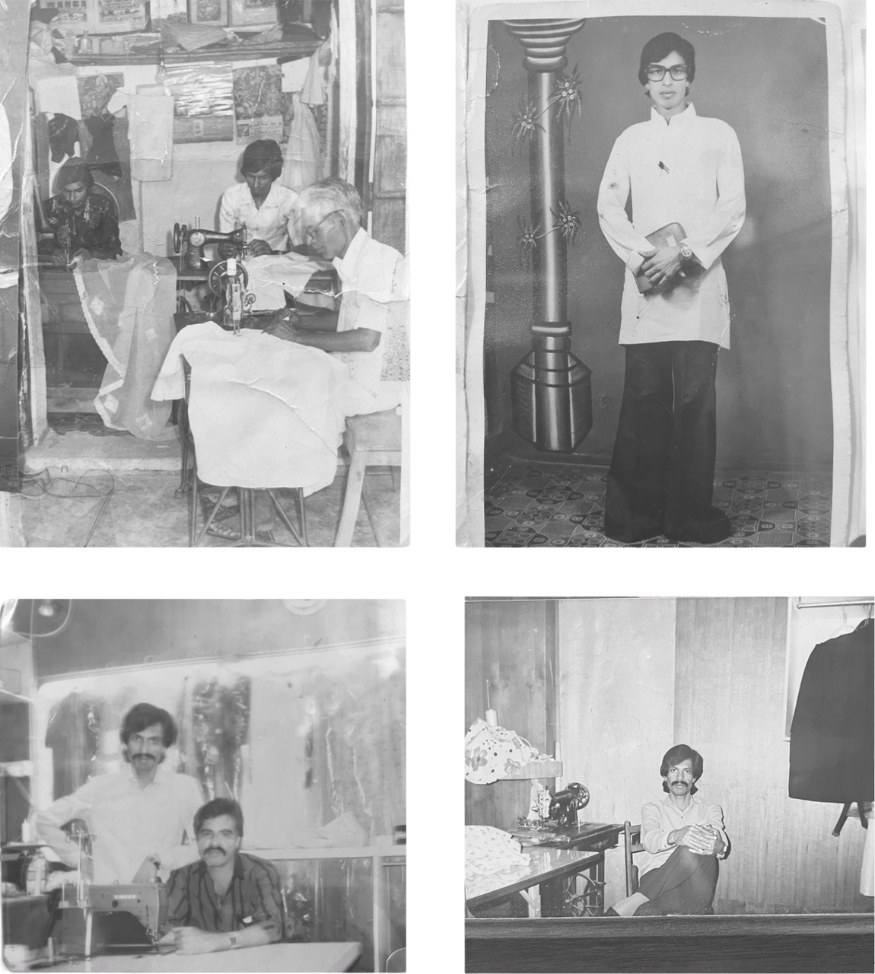
He made them the way tailoring worked before anyone had a workshop. From his own house, and from everybody else’s.
He went where the measurements were. At weddings he would sometimes arrive carrying his stitching machine, ready to make the final alterations before the clothes were worn.
The garment moved with the tailor until it sat right.
Kanhaiya Lal Idiwal
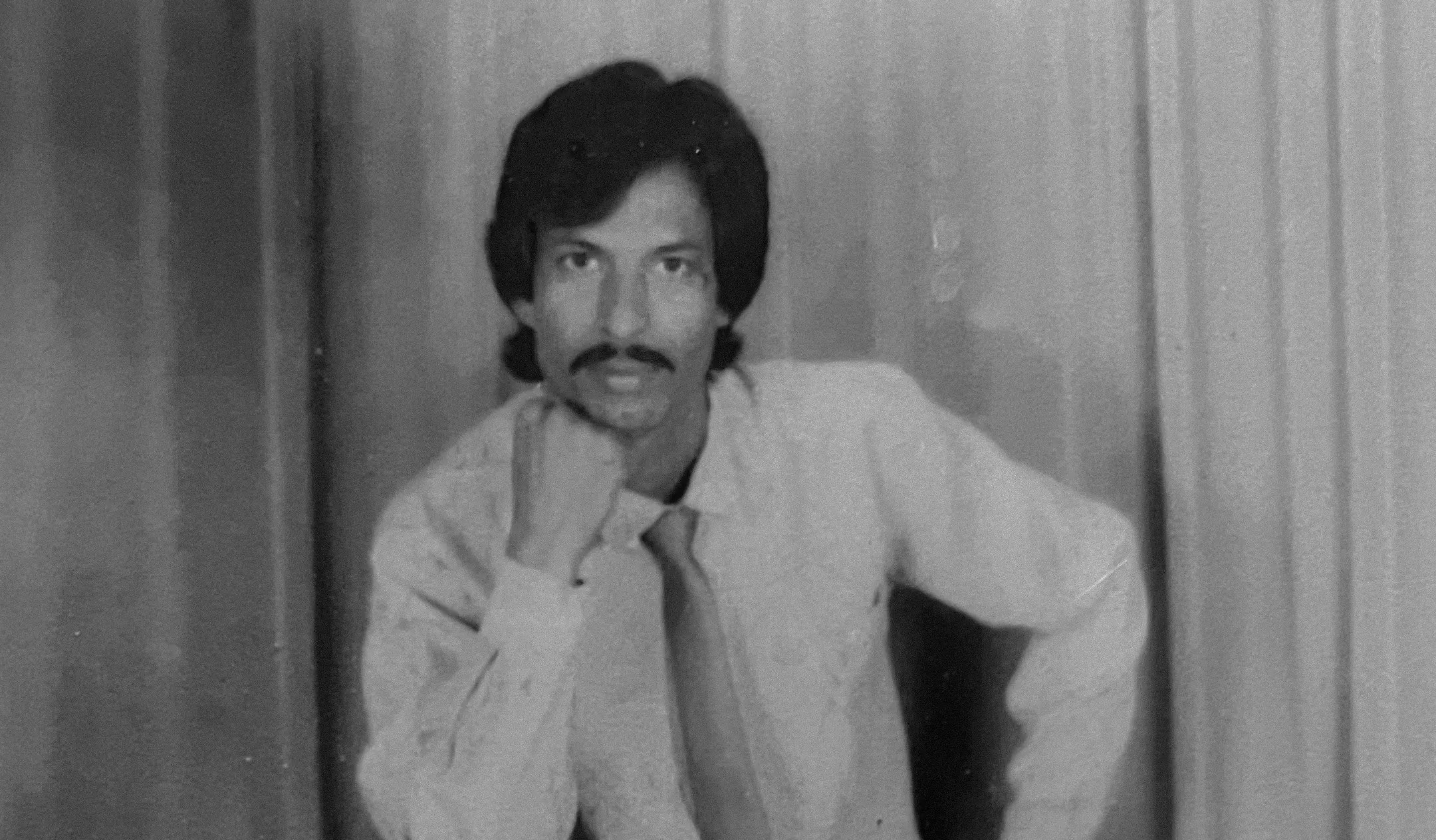
Himanshu’s father started young. Tailoring was already the profession waiting for him.
The work took Kanhaiya Lal through Mumbai, Gujarat and Dubai before he returned to Rajasthan and settled in Pushkar. Here, he became a master tailor people knew by name.
In 2017, Himanshu was 23 when he suggested that they start something of their own. They opened Femeena Fashion together.
Kanhaiya Lal brought his work with him. Clients who already knew his tailoring continued with the new business, along with relationships built over years.
Eventually, his table was in the same building Kanha Mitraa works from today.
Himanshu Idiwal
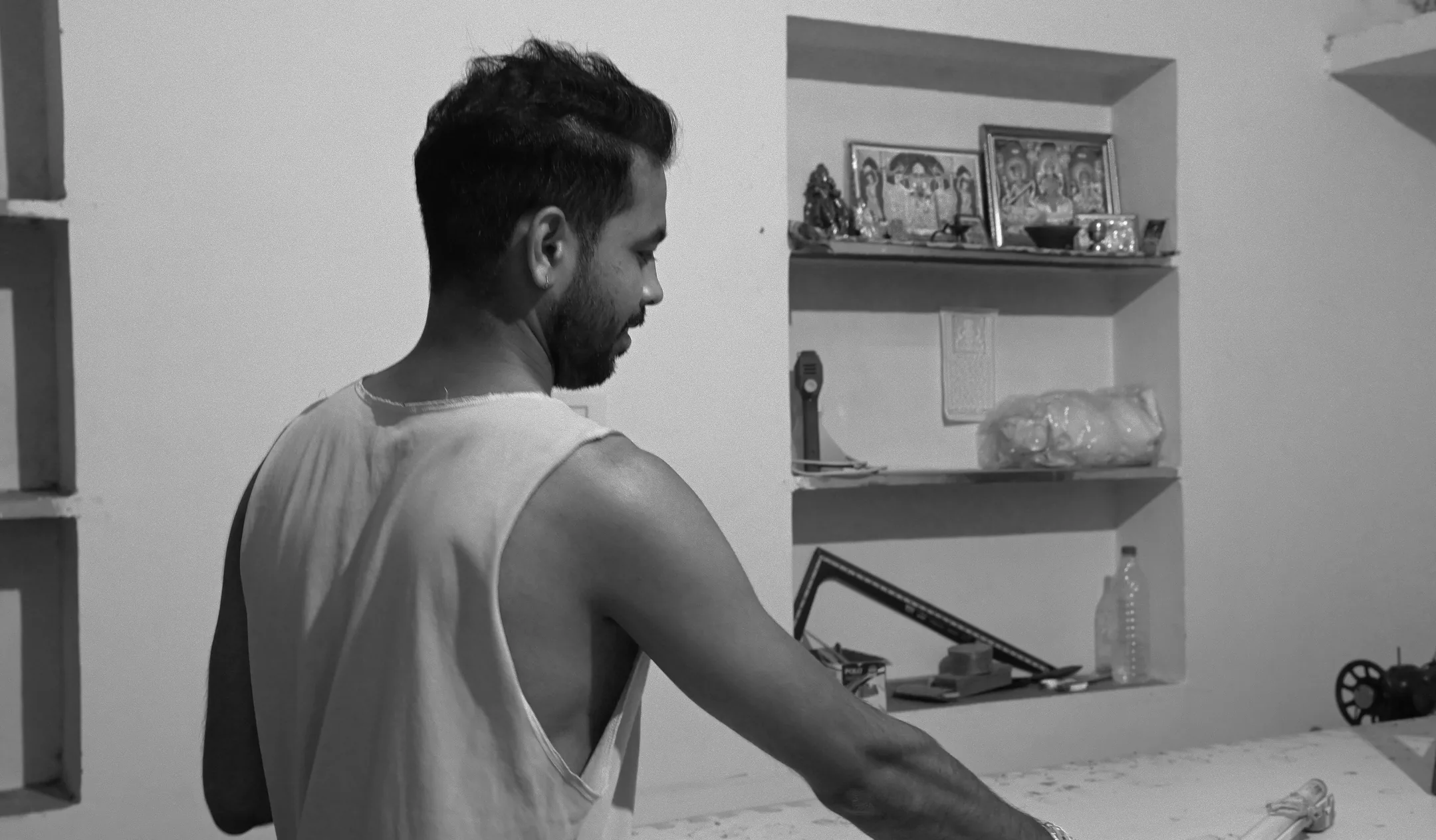
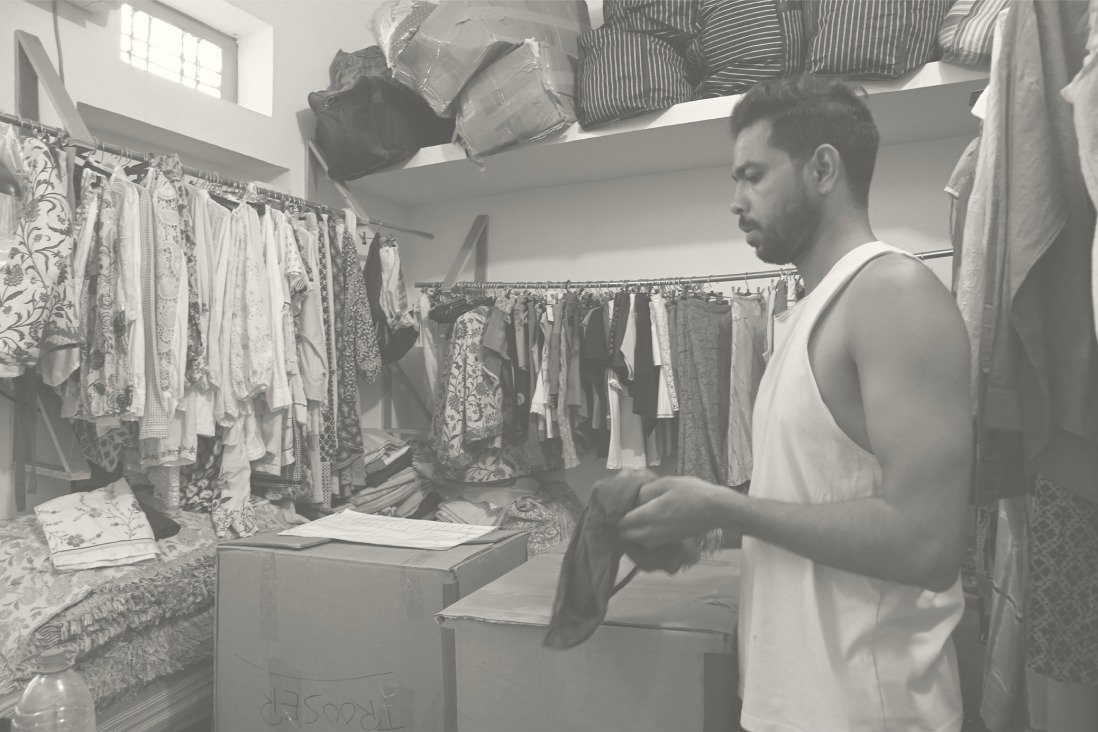
He had been asking to learn since he was small.
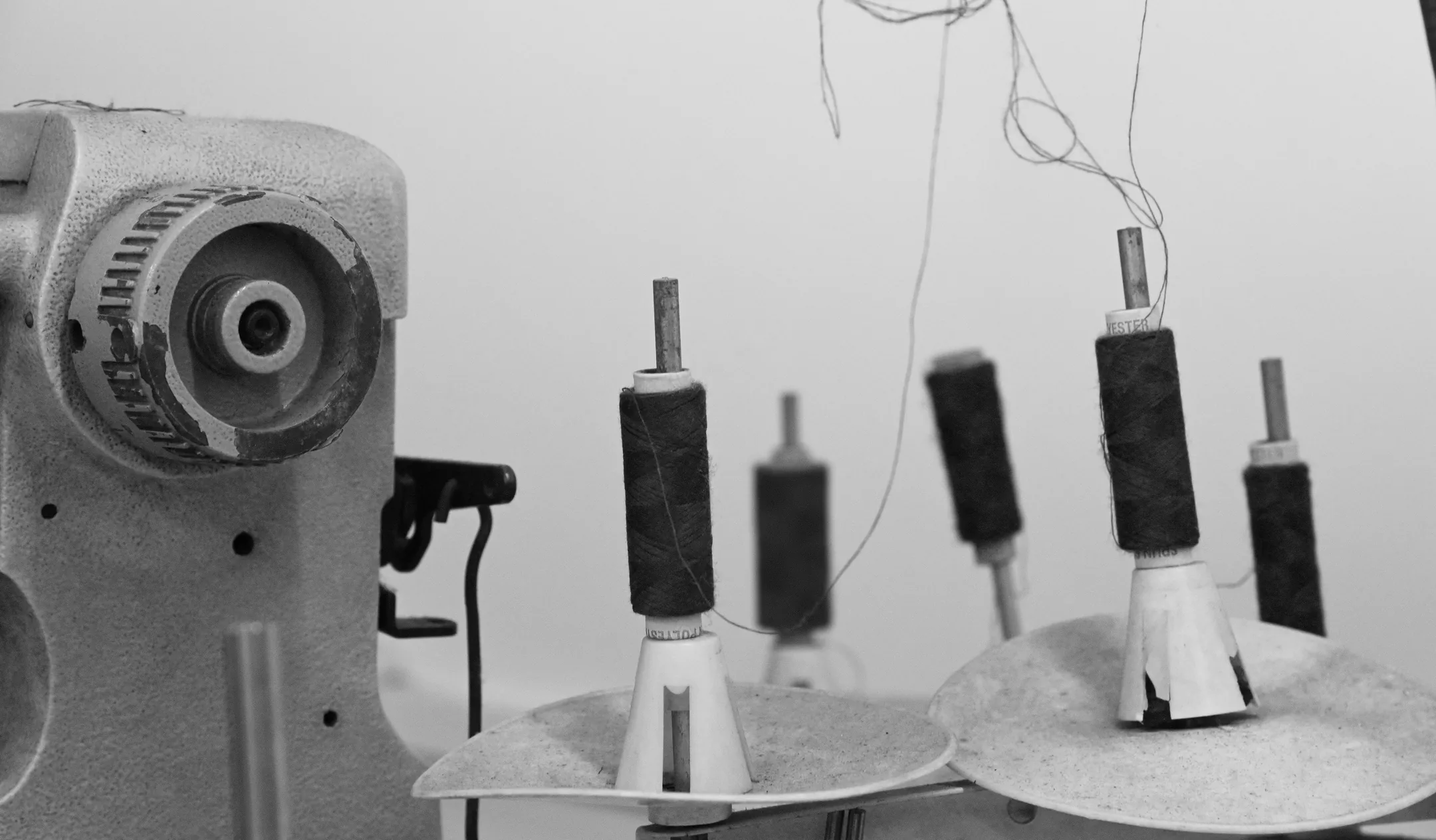
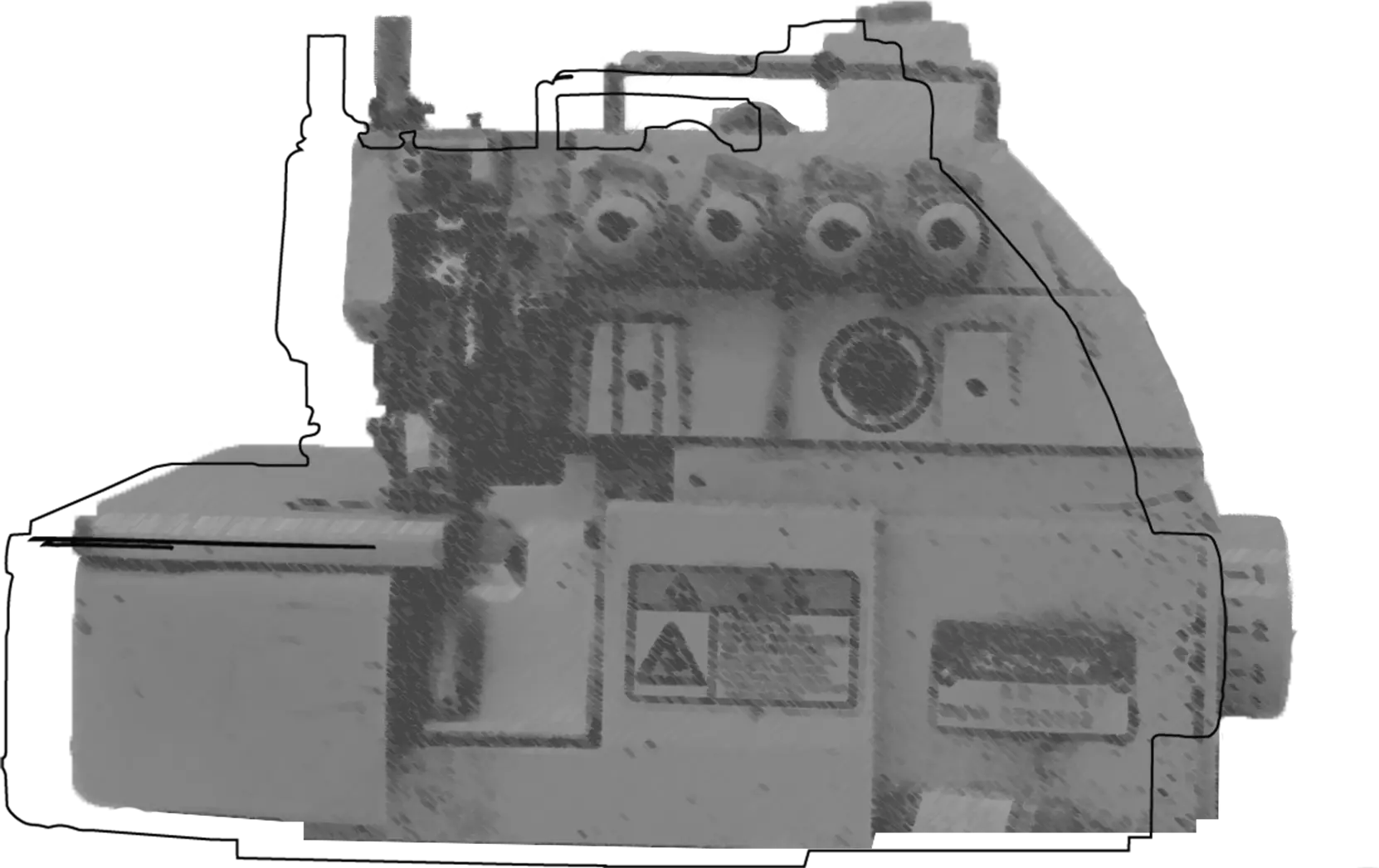
His father sat him at a manual sewing machine and taught him his first stitches. That machine is still in the atelier, in the corner.
Later, even while living away from Pushkar, coming home often meant finding his way back to the cutting table, helping while his father worked through a pattern.
Knowing the trade was one thing. Learning to hold an entire production was another.
Himanshu learned from every direction available to him. His father, the masters, the tailors, the clients. He watched, asked, tried, corrected, and asked again.
The family gave him somewhere to begin.
The work taught him the rest.

From one piece
to many
What was once tailoring for one person at a time has become production for brands making pieces again and again.
The building is the same. The manual machine is still here. Some of the tailors working with Kanha Mitraa knew the tables before the name was on the door.
The distance is the only part that changed.
A tailor once carried his machine to the client’s house. Now the client can be in another country and the work stays here in Pushkar.